


Game Cashouts – Play & Earn
4.86.55K Reviews
App Specs
- Version
- 0.16.1
- Updated On
- License
- Free
- Downloads
- 1,000,000+
- Developer
- Rewarded Games LTD
- Categories
- Entertainment
- Platform
- Android
Screenshots
 Analysis by AppCompare
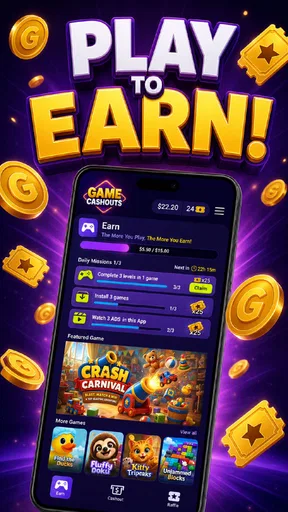
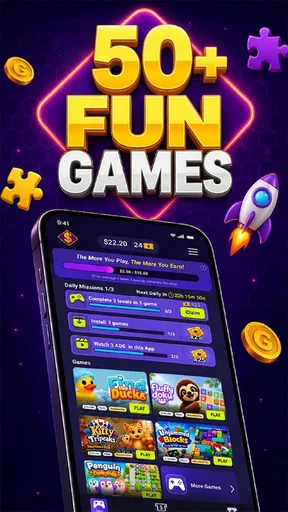
I tried Game Cashouts – Play & Earn as the kind of entertainment app you open when you have a few spare minutes and want something more than passive scrolling. Its central idea is simple: play available games, build up rewards, and work toward PayPal cash or gift cards. That makes it different from a normal casual-game hub, because the reward system is part of the reason to return.
My first impression was that the app is easiest to understand when treated as a small side activity rather than a dependable income source. The games are the attraction, while the cashout goal gives each session a little extra purpose. I would recommend it to someone who already enjoys trying mobile games and likes the idea of turning that spare-time habit into occasional rewards. I would not recommend it to anyone expecting a fixed hourly return or a replacement for a job.
How Game Cashouts feels in its current state
The app sits in the entertainment category and is developed by Rewarded Games LTD. It is free to install, which removes the biggest barrier to trying it. The current version is 0.16.1, and it runs on Android 8.0 or later. Those details matter because this is still a relatively focused rewards product: I would approach it as an evolving app rather than as a mature, all-purpose game platform.
The audience response is encouraging. It has an average rating of 4.8 from around 80 thousand ratings, with more than a million installs. That does not guarantee that every user will have the same experience, but it suggests that the basic combination of casual play and rewards is working for a substantial audience. The content rating is Mature 17+, so younger users should not treat it as a general family entertainment app.
The most useful way to judge the service is by separating three things that are easy to blur together: the quality of the games, the clarity of the reward path, and the practical value of the eventual cashout. A game can be enjoyable but slow to reward. A reward system can be clear but attached to games you do not enjoy. In my experience, the app makes sense only when all three pieces feel acceptable to you.
The basic routine is easy, but patience matters
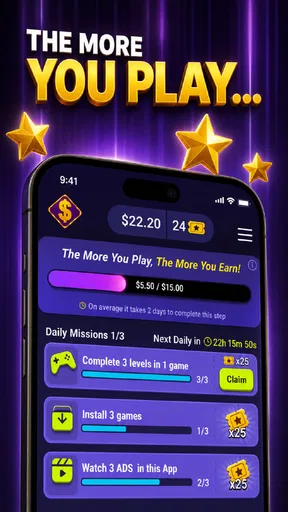
A typical session starts with choosing something to play, spending time inside that experience, and checking how the activity contributes toward available rewards. This is more appealing than installing random games one by one because the rewards concept gives the whole process a single destination. Instead of wondering whether an individual game is worth keeping, I can view it as one option inside a broader play-and-reward routine.
There is also a psychological trade-off. A progress bar or reward target can make a short session feel purposeful, but it can also encourage me to continue playing after the fun has disappeared. I found it better to decide in advance how long I wanted to play. That keeps the app in the entertainment category instead of turning every spare moment into a hunt for a slightly higher balance.
Worth Reading Before You Choose

EA SPORTS FC Mobile 26 Is a Bigger Football Game, but It Takes Time

Flipboard Shows What News Apps Must Do Beyond the Feed

Switching to Android Auto Means Rethinking Your Driving Routine

Google Calendar Makes a Crowded Week Easier to Manage

Ludo King Makes the Most of the Minutes Between Plans

Baby Panda World Brings Quick Play to Modern Phones, but Its Game Library Feels Busy
For example, imagine waiting for a train after work. I might use the app for a short session, choose a game that is immediately understandable, and stop when I reach the end of my available time. In that situation, the reward angle adds interest without demanding a major commitment. If I instead sit down expecting a predictable return after a long evening, the experience becomes much less attractive because entertainment value and reward value are not the same thing.
What the reward promise means in practice
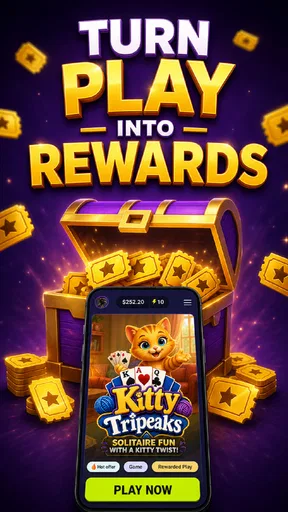
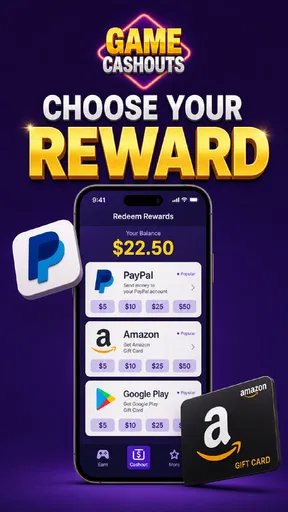
The appeal is obvious: the app promotes the possibility of PayPal cash and gift cards rather than limiting progress to in-game items. That gives the rewards a more useful destination. A gift card can fit a planned purchase, while PayPal cash offers broader flexibility. Still, I would keep expectations modest. Rewards apps usually make the journey more important than the headline outcome, and this one should be viewed as a way to make casual play feel more worthwhile, not as a financial tool.
One practical habit helps: check the reward screen before investing serious time. I want to know what kind of target I am working toward and whether the available option suits me. It is frustrating to spend time building progress and only later discover that the reward format is not what I wanted. This simple check also makes it easier to decide whether a particular session is worth continuing.
I would also avoid treating every game as equally valuable. A title that is fun for ten minutes may be a poor choice for a longer session, while a slower game may be easier to leave running as a relaxed activity. The best choice depends on whether I am seeking entertainment, progress, or a balance of both. That is a more useful approach than automatically selecting whatever appears first.
What has changed and what the current version tells me
The listed release date is December 10, 2025, and the current version is 0.16.1. Together, those details suggest a product that has moved beyond its earliest build while still having room to develop. I would read the version number as evidence of ongoing iteration, not as a promise that every part of the experience is already settled.
For a new user, that is mostly positive. Installing the current build means starting with the version the developer is actively presenting now, rather than judging the app by an early prototype. For an existing user, updates can be more complicated: interface details, reward presentation, or the balance between games and cashout progress may change over time. A familiar routine may not remain exactly the same after each update.
I would therefore keep the app updated if I planned to use it regularly, but I would also pay attention to the screens that matter most: how progress is displayed, where cashout choices appear, and whether the route from playing to redeeming remains easy to follow. Those are the parts that directly affect trust. A new visual design is less important than knowing what I earned and what action comes next.
The current build also affects how I compare it with alternatives. A traditional casual-game app may offer a more polished selection of games without the extra reward layer. A survey or cashback service may make the earning task clearer but offer less entertainment. Game Cashouts occupies the middle ground: it is for people who prefer earning through play, even if that means accepting more variation in the experience.
Who will get the most from it
I think the strongest audience is made up of casual players who already spend time on mobile games. If I am going to play anyway, a rewards layer can make the habit feel more productive. It is also suitable for people who enjoy trying different game experiences instead of committing to one large title. The free entry makes experimentation easier, especially when I am unsure whether the format will suit me.
It can work well for short breaks, travel downtime, or a quiet evening when I want something interactive but not demanding. The app is particularly appealing when the reward goal is a bonus rather than the sole reason for opening it. That mindset protects the fun side of the experience and makes slower progress less disappointing.
I would skip it if I dislike advertisements, repeated reward checks, or the feeling of working toward a threshold. I would also choose a conventional game instead if I want deep storytelling, competitive balance, or a carefully designed long-term progression system. The reward structure changes the way I look at play, and that is not automatically an improvement for every player.
Users under the Mature 17+ rating should not use it, and parents should not assume that a casual-looking rewards app is automatically suitable for children. The age guidance is part of the decision, not a minor label to ignore. Adults should also remember that reward-related apps can make time pass quickly, so setting a session limit is sensible.
Three useful habits that improve the experience
First, separate discovery from grinding. I would use the early sessions to find games I genuinely enjoy, rather than immediately chasing the fastest-looking progress. If a game feels tedious from the start, a reward target rarely makes the time feel better. Finding one or two enjoyable options gives the app a much healthier rhythm.
Second, treat the cashout screen as part of the workflow. Before playing for a long stretch, I would review the available redemption route and make sure it matches my preference between PayPal cash and gift cards. This prevents a common mistake: focusing entirely on earning and only thinking about redemption at the end. A reward is useful only when its format works for the person receiving it.
Third, keep a personal time-to-value check. I would not need a spreadsheet; a simple mental comparison is enough. After several sessions, ask whether I am still enjoying the games and whether the reward progress feels like a pleasant extra. If the answer is no, switching to another form of entertainment is the better choice. This is especially important because the app can make small increments feel more significant than they are.
A fourth habit is to avoid multitasking with important tasks. Rewarded play is easy to justify as “only a few minutes,” but repeated sessions can consume more time than expected. I would use it during genuinely free moments, not while studying, working, or handling anything that requires attention. That sounds obvious, but the reward loop is precisely what can make casual use expand.
Where the experience still has friction
The biggest limitation is the gap between entertainment and earning expectations. The app can make casual play more engaging, but it cannot remove the time cost of playing. Anyone who installs it mainly for money may become impatient when progress feels slow. That is not necessarily a flaw in one screen or one game; it is a fundamental trade-off in the entire concept.
Game variety can also create uneven sessions. If the available choices do not match my taste, the reward objective may not be enough to keep me interested. A normal game store gives me the freedom to search for exactly the genre, style, and difficulty I want. A curated rewards environment is more convenient, but that convenience can come with less control.
There is a trust issue as well. Whenever an app connects play with real-world rewards, I want the path from activity to redemption to be understandable. Clear progress, readable conditions, and a predictable cashout flow matter more here than flashy presentation. If any of those steps feel confusing, I become cautious even when the games themselves are enjoyable.
This is where a conventional alternative may be better. If my priority is reliable entertainment, I would choose a normal free-to-play game and judge it by controls, content, and enjoyment. If my priority is maximizing practical rewards, I would compare it with services designed specifically around cashback or tasks. Game Cashouts is best when I genuinely want both sides, not when I am trying to force one category to behave like another.
Questions I would consider before installing
The first question is whether the app costs anything to try. It is free, so the decision is mainly about time, attention, and whether the reward style appeals to me. I would still avoid installing it with unrealistic expectations. Free access does not mean the rewards arrive without effort.
The second question is whether rewards can be used in a practical way. The app is built around PayPal cash and gift cards, so I would decide which of those is more useful before committing to a longer routine. Someone who rarely uses either option may find that the reward motivation is weaker than expected.
The third question is whether it works on my device. Android 8.0 is the minimum operating system, so I would check that before downloading. This is a small detail, but it prevents wasting time on an installation that cannot run properly.
The fourth question is whether it is appropriate for me or my household. The Mature 17+ rating means I would not hand it to a child simply because the activity looks like casual gaming. Adults who are comfortable with the rating can make their own decision, but the label should be taken seriously.
The final question is what success looks like. If success means having a few enjoyable sessions and eventually receiving a modest reward, the concept is easy to appreciate. If success means earning a predictable amount on a schedule, I would choose a different kind of app. The right expectation changes the entire experience.
What I would watch as the app evolves
Because the product is on version 0.16.1, I would watch how future updates affect the balance between play and reward progress. More games would be useful only if they remain easy to discover and worth the time. A larger selection by itself would not solve the problem of finding something enjoyable.
I would also look for improvements in clarity. The most valuable evolution would be a smoother explanation of how activity becomes redeemable progress, with fewer moments where I need to guess what to do next. For existing users, consistency would matter just as much as new content. Changes should make the routine easier, not merely make the interface look different.
Another point to watch is whether the app continues to feel like entertainment first. Rewards can attract new users, but long-term use depends on whether the games remain pleasant enough to revisit. If the experience becomes too focused on chasing progress, it may lose the casual quality that makes it appealing in the first place.
My overall view is favorable, with a clear condition: use it as a recreational rewards app, not as an income promise. Game Cashouts – Play & Earn gives casual players a reason to explore games they might otherwise ignore, and the possibility of PayPal cash or gift cards adds a tangible finish to that routine. Its free price and broad Android compatibility make trying it straightforward, while the strong user response suggests that the idea connects with many people.
I would install it for relaxed sessions, set a limit on my time, and check the redemption path before investing heavily. I would skip it if I wanted a premium standalone game, guaranteed earnings, or a completely frictionless experience. For the right user, the app turns spare gaming time into a more purposeful pastime. For everyone else, a regular game or a dedicated rewards service may be the more honest fit.
Pros
- Simple games make it easy to start earning rewards.
- Clear cashout goals help track progress toward redemption.
- Short play sessions fit well into spare time.
- Offers a variety of games instead of just one activity.
- No advanced gaming skills are required to participate.
Cons
- Rewards may accumulate slowly during regular gameplay.
- Some offers can require lengthy tasks before crediting.
- Cashout options and availability may vary by region.
- Ads may interrupt gameplay or extend the time to earn.
- Earnings are unlikely to replace a meaningful source of income.
FAQs for Game Cashouts – Play & Earn
What is Game Cashouts – Play & Earn?
Game Cashouts – Play & Earn is a rewards-focused mobile gaming app that lets users play available games and complete in-app activities while working toward points, coins, or other redeemable rewards. The experience is generally built around short sessions, progress tracking, and a cashout section. Before downloading, review the current app description and reward terms, since available games, earning rates, and redemption options may change over time.
How do you earn rewards in Game Cashouts – Play & Earn?
Earnings typically come from playing supported games, reaching specific milestones, completing tasks, or interacting with promotional offers shown inside the application. The amount earned can depend on the activity, time spent, region, and any applicable campaign rules. Users should read each offer carefully, because some rewards may require a particular installation method, minimum playtime, level, or completion deadline.
Can rewards from Game Cashouts – Play & Earn really be withdrawn?
The app may provide withdrawal or redemption options after you meet its eligibility requirements, but cashouts are not necessarily immediate or guaranteed for every user. You may need to reach a minimum balance, verify your account, and select an available payment method. Processing times, supported countries, fees, and reward availability can vary, so check the in-app cashout rules before investing significant time.
Is Game Cashouts – Play & Earn free to download and use?
The application may be free to install, although it can include advertising, sponsored offers, optional purchases, or links to other games and services. A free download does not mean that every feature is completely free or that rewards are earned without conditions. We recommend checking the store listing, permissions, privacy information, and any payment prompts before accepting offers or entering personal details.
Is Game Cashouts – Play & Earn safe for personal information?
As with any rewards application, you should review its privacy policy, requested permissions, and the identity of any third-party partners before using it. Avoid sharing unnecessary sensitive information, and never provide passwords, banking credentials, or verification codes through suspicious messages. Download the app only from an official store, keep your device updated, and stop using the service if its behavior or requests seem unsafe.


